2026 Best Performance Livestock Feed Types for Global Buyers
Choosing the right performance livestock feed is no longer a simple price comparison. Global buyers now examine animal results, ingredient safety, supply continuity, and measurable value. A low-cost ration may perform poorly when moisture, storage, or nutrient variation is overlooked.
Dr. Mike Hutjens, a respected dairy nutrition specialist, has stated, “Feed efficiency is pounds of milk produced per pound of dry matter consumed.” His principle remains useful beyond dairy operations. It encourages buyers to connect feed composition with actual farm outcomes, including growth rate, milk yield, feed conversion, health, and reproductive performance. The best product is not always the feed with the highest protein number. Sometimes, the quieter details matter more.
This guide examines major performance livestock feed types for international purchasing decisions in 2026. It considers compound feed, premixes, forage-based rations, high-protein supplements, mineral blends, and species-specific formulas. Each category has a different purpose. Each also carries practical limits.
Look closely.
Buyers should request laboratory analysis, ingredient traceability, storage guidance, and documented quality-control procedures. Mycotoxin screening, moisture control, amino-acid balance, and fiber digestibility can strongly influence results. Local climate creates another challenge. Feed that performs well in a cool, dry warehouse may deteriorate quickly in humid conditions.
No formula guarantees identical results everywhere. Genetics, water quality, housing, management, and disease prevention also shape performance. This is where careful judgment matters. Some recommendations may appear convincing but lack farm-level evidence. Responsible buyers should compare supplier claims with feeding trials, technical records, and independent advice. A practical decision may remain imperfect, but it should be transparent, evidence-based, and suitable for lawful use in the destination market.
What Defines High-Performance Livestock Feed in 2026?
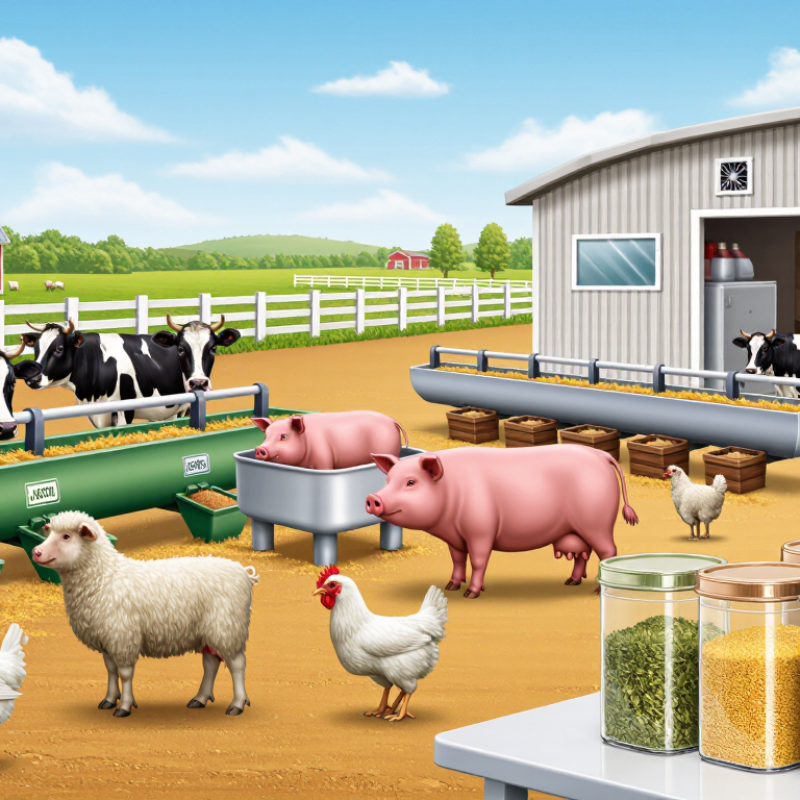
High-performance livestock feed in 2026 is defined by results, not attractive labels. Feed must support steady growth, efficient conversion, reproductive health, and strong immunity. Its value depends on the animal’s species, age, genetics, climate, and production goal. A broiler ration needs different energy balance than a dairy cow’s feed.
Reliable feed begins with consistent raw materials and tested nutrient levels. Buyers should request evidence for protein, energy, fiber, minerals, moisture, and contaminant control. Digestibility matters. A feed can show high protein yet perform poorly when animals cannot use it efficiently. Clean storage is equally important. Warm, damp warehouses can damage quality within days. Traceability from supplier to farm also supports faster action when results change.
Tips: Compare laboratory data with farm performance. Check feed intake, weight gain, milk yield, manure texture, and animal condition. Keep samples from each delivery. Small details often reveal bigger problems. Local testing is wise because crop quality varies by season and region. No formula is perfect. Even experienced buyers may overvalue laboratory numbers and underestimate water quality, transport stress, or poor ventilation. Performance should be reviewed every production cycle, not assumed from one successful shipment.
How to Evaluate Feed Quality, Safety, and Supplier Reliability
For 2026 global buyers, feed performance begins with the animal’s needs, not attractive claims.
Compare complete feed, concentrates, forage products, and mineral supplements by species and production stage. Check protein, energy, fiber, moisture, and mineral levels against a verified specification. A dairy ration may need different fiber control than a rapidly growing broiler diet. Labels can look precise. They are not always complete.
Request recent laboratory results for mycotoxins, pathogens, heavy metals, moisture, and nutrient variation. Confirm the laboratory’s accreditation and testing methods. Ask how samples were collected, sealed, transported, and stored. One clean test cannot represent every shipment. Retained samples and batch numbers make investigations more practical.
Inspect packaging for tears, dampness, pests, unusual odors, or caking. Small signs matter.
Supplier reliability requires evidence over time.
Review production capacity, export experience, traceability records, recall procedures, and response times. Ask for certificates that match the actual facility and product. Verify compliance with destination-country feed laws before payment or shipment. A video call can reveal storage conditions, but it cannot replace an independent audit.
I once focused too heavily on nutrient percentages and overlooked inconsistent moisture control. That mistake changed my checklist.
Price still matters, but unstable quality can increase waste, illness risk, and transport costs. Keep written agreements for specifications, tolerances, inspection rights, and corrective action.
Trust should be documented.
What Global Buyers Should Know About Compliance and Storage
For global buyers, feed performance begins with compliance, not only protein or energy values. The International Feed Industry Federation’s 2024 sector outlook places annual global feed production above one billion tonnes. That scale makes traceability essential. Request a batch number, ingredient origin, manufacturing date, shelf life, and certificate of analysis. Check declarations for moisture, crude protein, additives, contaminants, and prohibited substances. Requirements differ across markets, so acceptance should follow the destination country’s current rules. Codex CXC 54-2004 recommends good practices throughout animal-feed production and distribution.
Storage conditions can quietly reduce feed quality. Keep bags on pallets, away from walls, rain, chemicals, and direct sunlight. A practical target is a cool, dry, well-ventilated store, with visible temperature and humidity records. Inspect for clumping, unusual odor, insects, damaged packaging, or condensation. Rotate stock by first-in, first-out, but do not assume older feed is automatically unsafe. The FAO’s 2023 food-loss report estimates 13.2% of food is lost before retail; feed logistics deserve similar attention, even when the categories are not identical.
Mycotoxin control needs more than a supplier promise. Use representative sampling, sealed samples, and independent laboratory testing when risk is high. The European Food Safety Authority has repeatedly identified cereals and cereal by-products as important exposure sources for several contaminants. I would not rely on one clean sample from a large silo. Records may also be imperfect, especially during transshipment. Recheck documents, storage temperatures, and local compliance before release. A low-cost feed becomes expensive when animals underperform or a shipment is rejected.
2026 Best-Performance Livestock Feed Types for Global Buyers
Typical crude-protein ranges and practical moisture targets for dry storage. Values are feed-analysis benchmarks; buyers should confirm the certificate of analysis, destination-country requirements, labeling rules, contaminant limits, traceability records, and storage conditions for every shipment.
Soybean meal provides the highest typical crude-protein concentration among these dry feeds, while maize is mainly used as an energy source. For storage, dry feeds should be protected from rain, condensation, pests, and ground moisture. Moisture targets shown here are practical storage benchmarks rather than universal legal limits; importing countries may apply different specifications.