Choosing reliable poultry nutrition suppliers requires more than comparing prices or reading polished product brochures. Global buyers must examine ingredient quality, formulation accuracy, laboratory controls, technical support, and delivery consistency. A balanced feed can look ordinary in a warehouse, yet its impact appears in feed conversion, shell strength, flock uniformity, and mortality records.
Dr. Peter Ferket, a respected poultry nutrition researcher, has stated, “Nutrition is not simply about meeting requirements; it is about supporting the bird’s whole production system.” This practical view should guide every supplier evaluation. Good suppliers explain amino-acid levels, mineral sources, enzyme stability, storage conditions, and recommended inclusion rates. They also provide traceable documentation and adapt formulas to local grains, climate, genetics, and production goals.
Details matter. A shipment arriving after prolonged exposure to humidity may lose value before it reaches the farm. A premix label may be technically correct but difficult for workers to apply consistently. These gaps are easy to overlook. Sometimes, buyers focus too heavily on laboratory numbers and not enough on field performance. That is a mistake worth reconsidering.
This guide introduces leading poultry nutrition suppliers serving international markets. It considers product range, scientific capability, quality assurance, regional reach, and customer support. The strongest companies do not promise identical results everywhere. They test, adjust, and communicate clearly. That honesty matters.
Performance varies.
Local validation remains essential. The right supplier should help buyers make informed decisions, not simply promote the cheapest formula.

Poultry nutrition suppliers provide more than bags of feed ingredients. They support broiler, layer, and breeder operations with stage-specific nutrition programs. These programs may include amino acids, vitamins, minerals, enzymes, organic acids, and feed additives. Each product should match the bird’s age, production goal, diet, and local feed conditions.
Reliable suppliers provide clear specifications, certificates of analysis, batch identification, and traceability records. They should explain inclusion rates, storage temperatures, shelf life, and handling requirements. Strong suppliers also test incoming materials and finished products for purity, moisture, and contamination risks.
Documentation matters during international purchasing. Buyers may need safety data, customs papers, product registrations, and compliance evidence for the destination market.
Technical Support
Nutritionists can review feed formulas, water quality, flock performance, and farm records before suggesting adjustments.
Farm-Specific Results
In practice, results often vary between farms. A formula that performs well in one region may need changes elsewhere.
Feed quality, heat stress, genetics, and management can alter outcomes. No supplier can remove every risk. I have seen promising plans fail when storage was poor or staff misunderstood dosing instructions. Honest suppliers explain these limits and encourage field monitoring.
Regular Performance Tracking
They may track feed conversion, egg production, body weight, mortality, and litter condition through regular reports. That creates a more dependable purchasing decision.
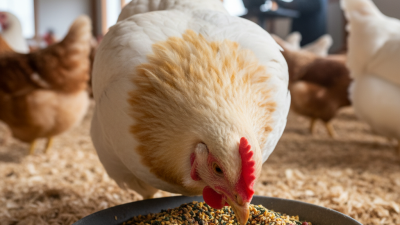
Top Poultry Nutrition Suppliers for Global Buyers
How to Assess Supplier Expertise and Product Quality
A capable poultry nutrition supplier should explain how its formulas match bird age, climate, and production goals. Ask about the nutritionists behind the product. Their experience should include feed formulation, farm troubleshooting, and ingredient evaluation. Ask for evidence. Product specifications should list nutrient levels, recommended inclusion rates, storage conditions, and batch identification.
Quality checks must go beyond a polished brochure. Request recent certificates of analysis for protein, moisture, minerals, and key additives. Compare those results with independent laboratory testing when practical. Inspect the supplier’s sampling method, testing frequency, and traceability records. A reliable supplier can track ingredients from arrival to finished product. Check the details. Clear procedures often reveal more than marketing language.
On-site visits can provide useful, concrete clues. Look for clean storage areas, sealed bags, calibrated scales, and controlled mixing times. Ask how staff handle damaged packaging or unexpected test results. Strong suppliers respond with documented corrective actions, not vague promises. References from comparable farms can also show delivery consistency and technical support. Pricing can mislead. A lower quote may hide weak documentation, unstable formulas, or limited after-sales guidance. Still, even experienced suppliers can make mistakes, and laboratory results may not reflect every farm condition. Buyers should review performance records carefully and arrange small, monitored trials before wider adoption.
| Assessment Dimension | What Qualified Suppliers Typically Provide | Practical Buyer Benchmark | Verification Evidence | Why It Matters in Poultry Nutrition |
|---|---|---|---|---|
| Technical nutrition expertise | Nutritionists able to formulate diets by broiler, layer, breeder, age, production stage and local raw-material profile. | Documented formulation support and access to qualified poultry nutrition specialists. | Staff qualifications, technical service records, formulation protocols and customer trial reports. | Nutrient requirements change with genetics, climate, feed ingredients and production objectives. |
| Quality-management system | A documented system covering hazard analysis, process controls, corrective actions, sanitation and internal audits. | Current third-party certification such as HACCP, GMP+ or ISO 22000, where applicable to the product and market. | Valid certificate, audit scope, expiration date, non-conformity history and corrective-action records. | Systematic controls reduce contamination, formulation and handling risks. |
| Ingredient identity and specification | Defined specifications for moisture, crude protein, fat, fiber, ash, amino acids, minerals and active ingredients. | Every product has an approved specification, tolerance range, revision date and acceptance criteria. | Product specification, approved-source list, raw-material certificates and representative samples. | Consistent nutrient content supports accurate feed formulation and predictable flock performance. |
| Laboratory testing capability | Routine testing for proximate composition, amino acids, minerals, microbiology, mycotoxins and contaminants relevant to the product. | Risk-based testing frequency, calibrated equipment and independent confirmation for high-risk parameters. | Laboratory accreditation where available, test methods, detection limits, calibration records and recent reports. | Laboratory data verifies both nutritional value and feed-safety risks. |
| Microbiological control | Controls for Salmonella and other relevant organisms, supported by environmental monitoring and sanitation procedures. | Clear product-specific microbiological limits aligned with the destination market and customer risk policy. | Recent microbiological certificates, sampling plan, method references such as ISO 6579-1 where applicable, and corrective-action records. | Pathogen control protects flock health, workers, downstream feed and food-safety programs. |
| Mycotoxin and contaminant management | Risk assessment for aflatoxins, deoxynivalenol, zearalenone, fumonisins, ochratoxin A, heavy metals and pesticide residues as relevant. | Testing limits and action levels are documented for each destination market and ingredient risk profile. | Risk-based test reports, supplier declarations, sampling plans and regulatory-limit comparison sheets. | Contaminants can impair growth, immunity, egg production, fertility and feed conversion. |
| Batch traceability and recall readiness | Batch codes linking finished products to raw materials, production records, test results, packaging and shipment details. | Traceability can be demonstrated through a documented mock recall and complete batch records. | Mock-recall results, batch genealogy, shipment records and written recall procedures. | Fast traceability limits exposure when a quality or safety issue is identified. |
| Certificate of analysis consistency | A certificate of analysis identifies the batch, production date, test results, methods and release status. | COA data is supplied for every agreed batch or shipment, with results matching the approved specification. | Random comparison of COAs with independent laboratory results and retained samples. | Reliable COAs help buyers confirm product identity and release incoming materials efficiently. |
| Product stability and shelf life | Defined shelf life based on formulation, packaging, storage conditions and stability data. | Shelf-life claims are supported by stability or historical quality data and clear storage instructions. | Stability studies, retained-sample records, packaging specifications and storage-condition requirements. | Heat, moisture, oxygen and extended transport can reduce vitamin, enzyme and probiotic activity. |
| Regulatory and export readiness | Documentation for ingredient approval, labeling, import permits, customs, safety data and destination-market requirements. | Supplier confirms compliance before shipment and provides country-specific documents when required. | Regulatory declarations, labels, safety data sheets, export documents and import-eligibility checks. | Requirements differ by jurisdiction and may affect clearance, labeling and legal sale. |
| Supply reliability and logistics | Defined production capacity, lead times, packaging options, shipment conditions and contingency plans. | On-time delivery performance, documented minimum order quantities and transparent capacity allocation. | Delivery records, production schedule, warehouse audit, inventory policy and business-continuity plan. | Supply interruptions can force ration changes and disrupt flock performance. |
| Technical support after purchase | Support for feed formulation, dosage, mixing order, storage, troubleshooting and field performance review. | Written response process, named technical contact and documented complaint investigation. | Service-level agreement, technical manuals, farm-visit records and complaint-response history. | Correct application is essential for additives, premixes, enzymes and specialty nutritional products. |
| Field validation and performance data | Controlled trial results covering feed conversion ratio, average daily gain, livability, egg production, egg mass or shell quality, as relevant. | Claims are supported by transparent trial design, control groups, sample size and statistical analysis. | Full study reports, test conditions, inclusion rates, statistical methods and independently generated data where available. | Farm outcomes are influenced by many variables, so controlled evidence is more reliable than unsupported claims. |
| Overall supplier evaluation score | Balanced assessment across technical capability, product quality, compliance, service, logistics and total cost. | Use a weighted scorecard; quality and safety should normally receive greater weight than price alone. | Completed questionnaire, audit report, sample approval, trial results and commercial review. | A structured scorecard improves comparability and reduces decisions based only on price or marketing claims. |
Poultry nutrition suppliers now serve a market that demands precision, traceability, and practical results. The Alltech Agri-Food Outlook 2024 estimated global poultry feed production at approximately 384 million metric tons in 2023. That scale increases pressure on buyers to secure consistent ingredients, not merely low prices.
Corn and wheat supply energy, while soybean meal, canola meal, and other protein sources support muscle growth.
Synthetic amino acids, including lysine, methionine, and threonine, help balance diets and reduce excessive crude protein.
Enzymes can improve nutrient release from cereals and improve manure quality. Phytase is especially relevant where phosphorus efficiency matters.
The International Feed Industry Federation identifies feed safety systems, testing, and traceability as essential parts of responsible sourcing.
Mineral premixes should match bird age, genetics, housing, and local water conditions. Vitamin stability also matters during storage.
Heat, moisture, and long transport routes can reduce performance before feed reaches the farm.
FAO guidance emphasizes contamination control, hygienic handling, and risk-based monitoring across the feed chain.
Small differences matter.
A reliable supplier should provide certificates of analysis, batch records, storage guidance, and technical support.
Results should be checked through feed conversion, weight gain, uniformity, and mortality data.
No formula is perfect. Local ingredient variation can expose weaknesses, and even a well-designed ration may need seasonal adjustment.
Global poultry growth demands more than competitive pricing. FAOSTAT recorded approximately 137 million tonnes of poultry meat production in 2022. This scale increases pressure on feed consistency, documentation, and delivery resilience. Reliable suppliers should show batch-level traceability, approved raw-material sources, and clearly defined storage conditions. Certificates of analysis should cover moisture, crude protein, pathogens, and relevant mycotoxins. Numbers matter.
Compliance must work across borders. Codex Alimentarius’ General Principles of Food Hygiene, revised in 2022, supports hazard analysis, sanitation controls, and documented verification. Strong suppliers align their systems with these principles, while also meeting destination-country requirements. Buyers should request recent audit records, allergen controls, recall procedures, and retention samples. A polished certificate is not enough. Testing frequency and laboratory independence deserve closer attention.
Safety also depends on continuity. WOAH disease reporting shows how animal-health events can disrupt regional poultry production and logistics. Suppliers should maintain qualified alternative sources, temperature-monitored warehouses, and realistic emergency allocation plans. Feed additives and premixes need precise labeling, dosage guidance, and multilingual technical support. In practice, no supplier is flawless; even a clean audit can miss a weak handover between production and shipping. Global buyers should therefore combine supplier claims with site inspections, independent testing, and performance reviews. This slower approach may prevent expensive surprises.
Top Poultry Nutrition Suppliers for Global Buyers
Selecting the Right Supplier for Different Poultry Operations
Choosing a poultry nutrition supplier starts with the farm’s actual production system. A broiler operation needs rapid growth support, while layers require steady calcium management and shell strength. Breeders may need tighter control of body weight and fertility. Ask for feeding protocols, ingredient specifications, and recent laboratory results. Generic advice is rarely enough.
Evaluate how the supplier handles daily realities. Can products arrive safely during humid weather? Are bags sealed, labeled, and traceable by batch number? A reliable supplier should explain storage temperatures, shelf life, and mixing rates clearly. Technical staff should also review feed intake, water quality, litter condition, and mortality records. Small details matter. Delivery consistency matters too.
Price should not lead the decision. Compare nutrient density, transport costs, minimum order quantities, and expected feed conversion. Request a controlled farm trial before changing the full ration. Keep records for body weight, egg output, shell quality, and medication-free performance. Results may differ between houses, seasons, and genetics. That is easy to overlook.
No supplier fits every operation. A smaller farm may need flexible volumes and practical advice, while an integrated producer may prioritize forecasting and uniform supply. Buyers should also challenge their own assumptions. A familiar formula may no longer suit local grain quality or changing flock conditions. Careful review, honest data, and direct communication usually reveal the better long-term fit.
Representative crude-protein levels commonly used in complete poultry feeds, expressed as a percentage of feed weight.
Broilers generally require higher protein during early growth, while layer diets are formulated to support egg production with balanced protein and amino acids. Actual specifications vary with genetics, feed ingredients, climate, production targets, and local regulations.