How to Source Livestock and Feed from Global Suppliers?

Sourcing livestock and feed across borders is a practical challenge, not just a search for low prices. Buyers must assess animal health, feed consistency, transport capacity, traceability, and supplier reliability. The scale is significant: Alltech’s 2024 Agri-Food Outlook estimated global commercial feed production at about 1.29 billion metric tons in 2023. FAO’s 2023 report, Pathways towards lower emissions, notes that livestock provides roughly 34% of the world’s protein supply. These figures show why procurement choices can affect farms, markets, and food security.

A sound sourcing process begins with clear specifications. For livestock, request documented health records, breed details, age, and transport conditions. For feed, check ingredient composition, nutrient analysis, storage practices, and batch documentation. Compare suppliers using verifiable records, not polished sales claims alone. Where possible, speak with current customers and inspect facilities or arrange an independent review. Small details matter: a damp feed bag, unclear lot code, or delayed health certificate can reveal larger weaknesses.

No checklist removes every risk. Trade routes change, harvests fluctuate, and supplier paperwork may be incomplete. Buyers should verify current import requirements with qualified authorities and logistics partners before placing orders. This guide explains how to identify global suppliers, evaluate evidence, manage shipment risks, and build resilient purchasing relationships. It also considers a common blind spot: the cheapest offer may become costly when quality checks, delays, or losses are included. An honest comparison is sometimes uncomfortable. It is still better than guessing.

How to Source Livestock and Feed from Global Suppliers?

Define Livestock and Feed Requirements

Defining livestock and feed requirements is the first practical step in global sourcing. Start with the animal, not the supplier. Record species, breed, age, sex, target weight, production purpose, and expected delivery date. A dairy heifer needs different handling from a finishing beef animal. The difference affects transport space, veterinary checks, housing, and feed use.

Write measurable health requirements. Include vaccination records, disease-screening documents, identification methods, and acceptable body-condition ranges. Specify welfare expectations during loading, transit, and arrival. For feed, list energy, protein, fiber, moisture, mineral, and vitamin levels. Add ingredient restrictions and testing requirements for contaminants. Pellets, mash, hay, and silage behave differently in storage. Your receiving team must know what each shipment should look and smell like.

Keep the specification clear enough for suppliers to quote accurately. Include packaging, minimum shelf life, temperature controls, pallet details, delivery frequency, and inspection procedures. Ask for samples and independent laboratory results before approving regular shipments. In practice, a perfect-looking formula may perform poorly after a long voyage or a humid storage period. A specification can still be wrong. Review it after each shipment, especially when animals gain weight slowly, refuse feed, or show uneven intake. Leave room for local climate and seasonal forage changes, but never replace measurable standards with vague promises.

Find and Evaluate Global Suppliers

How to Source Livestock and Feed from Global Suppliers?

Finding global livestock and feed suppliers requires more than comparing prices. Start with traceability. Request farm origin, species, production dates, transport records, and feed ingredient declarations. The FAO Statistical Yearbook 2023 reports that livestock contributes about 40% of global agricultural output, showing why supplier resilience matters across food systems.

Build a practical scorecard covering quality, capacity, biosecurity, delivery performance, and documentation. Ask suppliers for recent laboratory results, veterinary certificates, storage conditions, and independent audit records. For feed, check moisture, protein levels, mycotoxin controls, and batch coding. Samples can mislead. Test multiple batches before signing a long-term agreement. OECD-FAO Agricultural Outlook 2024–2033 indicates continued growth in global meat demand, increasing pressure on reliable livestock and feed supply chains.

Evaluate logistics under realistic conditions. Compare port distance, cold-chain access, customs requirements, minimum order quantities, and backup routes. A low quotation may hide demurrage, spoilage, or inconsistent specifications. Use a small trial shipment with clear acceptance standards. Require corrective-action timelines when results fail. Paperwork is not proof. Verify certificates with the issuing authority and inspect facilities through qualified third parties. No scorecard is perfect. Seasonal disease risks, weather disruption, and currency changes can still affect performance, so review suppliers quarterly and record every decision.

Verify Health, Safety, and Import Compliance

Before buying livestock or feed overseas, confirm the rules of the destination country. Requirements can differ by species, age, origin, and intended use. Ask the relevant import authority or a qualified customs professional which permits and certificates are required. Do not rely on a supplier’s assurance alone.

For livestock, check identification records, vaccination history, veterinary health certificates, and any required testing or pre-export inspections. Confirm that transport arrangements meet animal-welfare requirements, including suitable space, ventilation, water, and rest. Keep copies of shipment documents and verify that animal details match across every record. Small gaps matter.

Feed needs careful review, too. Request ingredient lists, batch numbers, manufacturing dates, and certificates of analysis where appropriate. Check applicable limits for contaminants and confirm that ingredients are approved for the animals’ intended use. Sealed samples can help resolve quality concerns if a shipment arrives with unusual odor, moisture, or damaged packaging. Keep records.

Build time into the schedule for document checks, border inspection, and any required quarantine. A delayed shipment can affect animal welfare and feed quality, not just cost. I have seen plans look complete on paper while one unclear certificate stalled the handoff; that is easy to underestimate. Verify details with authorities before dispatch, and set out in writing who handles each document and inspection.

Agree on Pricing, Contracts, and Shipping Terms

Global livestock sourcing starts with a price that can survive market movement. The OECD-FAO Agricultural Outlook 2023-2032 projects global meat production to increase by about 12% by 2032. That growth may tighten feed demand and raise replacement costs. Do not accept one fixed quotation without a pricing formula.

Use a transparent formula linked to agreed feed grains, currency rates, and transport costs. Define the review date, adjustment ceiling, and evidence required. FAO’s Food Outlook 2024 reported strong global cereal production, yet regional shortages still affected local prices. A low headline price can hide quality losses, storage charges, or sudden currency exposure. I have seen buyers compare only the animal price. That assumption fails. Quality grades, vaccination records, mortality allowances, and inspection rights belong in the contract. Keep payment milestones clear. Small errors compound.

Shipping terms must match the product’s sensitivity. Specify the named port, delivery window, insurance responsibility, temperature controls, and document deadlines. The World Bank’s Commodity Markets Outlook has repeatedly highlighted freight and energy volatility as major cost risks for agricultural trade. Build a reasonable delay mechanism, but require immediate notice and verifiable records. Incoterms can allocate transport duties, yet they do not replace product-quality clauses. Feed should arrive dry, sealed, and tested for contamination. Livestock shipments need welfare procedures and veterinary documentation that meet destination requirements. A vessel delay can become a feeding crisis within days. We should admit one weakness: forecast models cannot predict every port disruption. Therefore, maintain an approved backup route and a modest safety stock, rather than relying on optimism.

How to Source Livestock and Feed from Global Suppliers? - Agree on Pricing, Contracts, and Shipping Terms
Indicative planning data for international procurement. Prices vary by breed, grade, season, origin, feed quality, freight market, inspection requirements, and destination regulations. Final terms should be confirmed through a written quotation and contract.
Category Product or Specification Typical Sourcing Region Indicative Price Range Recommended Pricing Basis Contract Points to Confirm Shipping and Incoterm Considerations Typical Lead Time Key Documents and Controls Commercial Risk
Live Livestock Breeding cattle; healthy females or bulls with documented age, weight, breed type, and reproductive status Temperate and subtropical cattle-producing regions USD 1,800–3,500 per head Per head, with a separate adjustment for weight, pregnancy status, or breeding certification Minimum age, weight range, vaccination status, mortality allowance, replacement terms, and veterinary inspection before loading FOB or CFR may be used; live-animal transport requires approved vessels, suitable ventilation, feed, water, and rest arrangements 6–14 weeks Veterinary health certificate, identification records, vaccination records, export permit, import permit, and insurance certificate Medium to High
Live Livestock Feeder cattle; specified live weight, health status, and age at shipment Major grassland and grain-finishing regions USD 1,500–2,800 per head Per kilogram live weight or per head, with a defined weighing location and shrink allowance Weight tolerance, feed withdrawal period, delivery mortality threshold, inspection rights, and claims procedure CFR or CIF can simplify freight coordination; confirm port handling, quarantine capacity, and inland transport after discharge 4–10 weeks Health certificate, export declaration, animal identification list, certificate of origin, quarantine records, and bill of lading Medium to High
Live Livestock Sheep or goats; meat or breeding stock with agreed sex, age, live weight, and health profile Dryland, Mediterranean, and temperate livestock regions USD 120–450 per head Per head for breeding animals; per kilogram live weight for meat animals Breed or type, dentition, body condition, pregnancy status, mortality limit, and replacement or refund mechanism Use an experienced livestock carrier or approved airfreight process; confirm quarantine and animal-welfare requirements before booking 5–12 weeks Veterinary certificate, vaccination records, animal identification, export permit, import approval, and pre-shipment inspection report Medium to High
Feed Grain Feed corn or maize; specified moisture, foreign material, broken kernels, and mycotoxin limits Large grain-producing regions in the Americas, Europe, and the Black Sea area USD 180–300 per metric ton FOB or CFR per metric ton, adjusted for moisture, quality deviations, and shipment size Quality tolerance, sampling method, rejection rights, demurrage allocation, payment security, and crop-year specification Bulk vessel or container shipment; CFR/CIF is common for larger volumes, while containerized delivery suits smaller lots 3–8 weeks Certificate of analysis, phytosanitary certificate, fumigation certificate where required, certificate of origin, and weight certificate Medium
Feed Grain Feed wheat or barley; feed-grade material with defined protein, moisture, and contaminant limits Temperate cereal-producing regions USD 190–320 per metric ton Per metric ton on an as-is or dry-matter basis; specify the basis clearly in the contract Protein range, moisture ceiling, test weight, mycotoxins, pesticide residues, and procedures for off-specification cargo Bulk or bagged shipment; confirm port storage, discharge rate, draft restrictions, and responsibility for demurrage 3–8 weeks Certificate of analysis, phytosanitary certificate, fumigation record, weight ticket, origin certificate, and inspection report Medium
Protein Feed Soybean meal or comparable protein meal; specified protein, moisture, fiber, and solvent-residue limits Oilseed-processing regions in the Americas, Europe, and Asia USD 350–550 per metric ton Per metric ton, with protein content and moisture adjustments agreed before shipment Minimum protein level, amino-acid profile, contamination limits, GMO status if relevant, and claim settlement process Bulk, breakbulk, or container delivery; CIF is useful where the buyer needs a landed-cost comparison 4–9 weeks Certificate of analysis, safety data sheet, certificate of origin, phytosanitary or sanitary documents, and independent inspection report Medium
Roughage Alfalfa or grass hay; defined bale density, moisture, leaf content, and mold-free condition Arid and temperate irrigated farming regions USD 180–400 per metric ton Per metric ton, preferably based on verified net weight at loading Moisture maximum, bale dimensions, contamination controls, quality grade, rejection criteria, and storage responsibility Container or breakbulk shipment; use moisture-resistant packaging and confirm pest-control rules at destination 4–10 weeks Phytosanitary certificate, fumigation certificate where required, moisture test, weight certificate, packing list, and inspection report Medium
Compound Feed Complete feed or concentrate pellets; formula matched to species, growth stage, and local regulatory requirements Regional feed-manufacturing hubs near grain and oilseed supplies USD 280–550 per metric ton Per metric ton, with a fixed formula period or an agreed raw-material cost adjustment formula Ingredient formula, nutrient guarantees, shelf life, packaging, batch traceability, prohibited ingredients, and recall obligations Container shipment is common; agree whether the price is EXW, FCA, FOB, or delivered to the buyer’s warehouse 3–7 weeks Certificate of analysis, ingredient declaration, safety data sheet, batch record, production date, and import registration documents Medium
Contract Structure Annual or quarterly supply agreement for livestock or feed with scheduled call-off quantities Applicable to approved suppliers in multiple origins Usually negotiated against a market index or quarterly quotation Use a base price plus transparent adjustments for freight, currency, quality, and verified input costs Quantity tolerance, delivery schedule, payment terms, force majeure, inspection, dispute resolution, governing law, and termination rights Choose one Incoterm per shipment lane; define the exact named place or port and the transfer point for risk 3–12 months for the agreement; shipment lead times remain product-specific Signed specification, approved-vendor record, purchase order, contract schedule, inspection plan, and insurance requirements Medium
Payment and Risk Control Cross-border payment for first-time or high-value transactions All international sourcing markets Common structures include 20–30% deposit and balance against documents Use documentary credit, documentary collection, or staged payment linked to inspection and shipment milestones Bank details verified independently, currency, payment deadline, late-payment interest, title transfer, and refund conditions For new suppliers, avoid paying the full amount before independent inspection and confirmation of shipment documents 5–15 business days for payment processing Pro forma invoice, commercial invoice, packing list, bill of lading, inspection certificate, insurance certificate, and bank verification record Medium to High

Inspect Deliveries and Monitor Supplier Performance

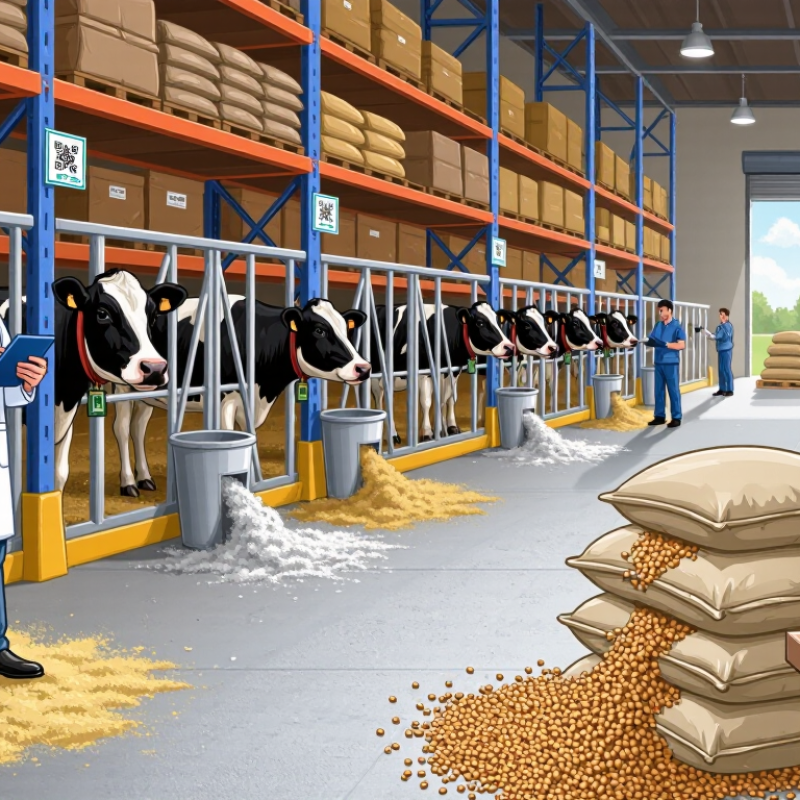
Every livestock or feed delivery needs a receiving plan before it leaves the supplier. For animals, confirm transport records, health certificates, identification numbers, and agreed arrival conditions. Inspect the vehicle seal and unloading area before opening the truck. Check breathing, posture, hydration, injuries, and signs of heat stress. Record counts immediately. Move weak animals to a supervised holding area and contact the designated veterinarian. Do not hide problems.

For feed, inspect bags, pallets, labels, lot numbers, moisture, odor, and visible pests. Take samples from different pallet levels, not only the top bags. An accredited laboratory can test declared nutrients and relevant contaminants. Keep photographs, temperature readings, delivery times, and signed receiving forms with every lot. These details make disputes clearer and support traceability.

Supplier performance should be measured with a simple monthly scorecard. Track on-time delivery, documentation accuracy, rejected lots, animal welfare incidents, feed test results, and response time. Numbers can mislead. A supplier may deliver on time while packaging repeatedly fails. In one review, I gave too much weight to price and delivery speed. The records later showed inconsistent moisture levels. I changed the evaluation method, but the earlier approval still affected production. That mistake remains useful. Review trends with the supplier, set corrective deadlines, and verify whether promised improvements appear in the next delivery. Inspections must remain independent, even when supply is tight.

Global Livestock and Feed Supplier Performance

Delivery inspections track punctuality, conformity with purchase specifications, traceability documentation, and temperature compliance. Higher scores indicate more reliable supplier performance.

Performance indicators are measured as the percentage of inspected deliveries meeting the defined procurement and quality requirements.