What Is Poultry Nutrition and Why Is It Important?

Poultry nutrition is the science of supplying chickens, turkeys, ducks, and other birds with nutrients for healthy growth, reproduction, and daily activity. It covers energy, protein, amino acids, vitamins, minerals, water, and feed quality. A balanced ration supports strong bones, steady weight gain, feather development, and reliable egg production. Without proper nutrition, even well-managed birds may show slow growth, weak shells, poor immunity, or uneven body condition.

Small details matter. A laying hen needs suitable calcium for shell formation, while a young broiler requires carefully measured energy and amino acids for muscle development. Clean water is equally important. Feed that appears fresh may still lose value through moisture, heat, mold, or poor storage. Farmers and poultry professionals often check feed labels, body weight, egg output, litter condition, and water intake. These observations help identify problems before they spread through the flock. Veterinary guidance and evidence-based feed standards should support major diet changes.

No flock performs perfectly.

Poultry nutrition is not a fixed recipe. Bird genetics, age, climate, housing, disease pressure, and production goals can change nutrient needs. A formula that works in a cool house may perform poorly during heat stress. This is where practical experience must meet professional advice. Some feeding decisions still require careful review, especially when results conflict with expectations. Better nutrition does not mean adding more supplements. It means providing the right nutrients, in suitable amounts, at the right stage of production. Understanding these principles helps producers protect bird welfare, improve efficiency, and make more reliable management decisions.
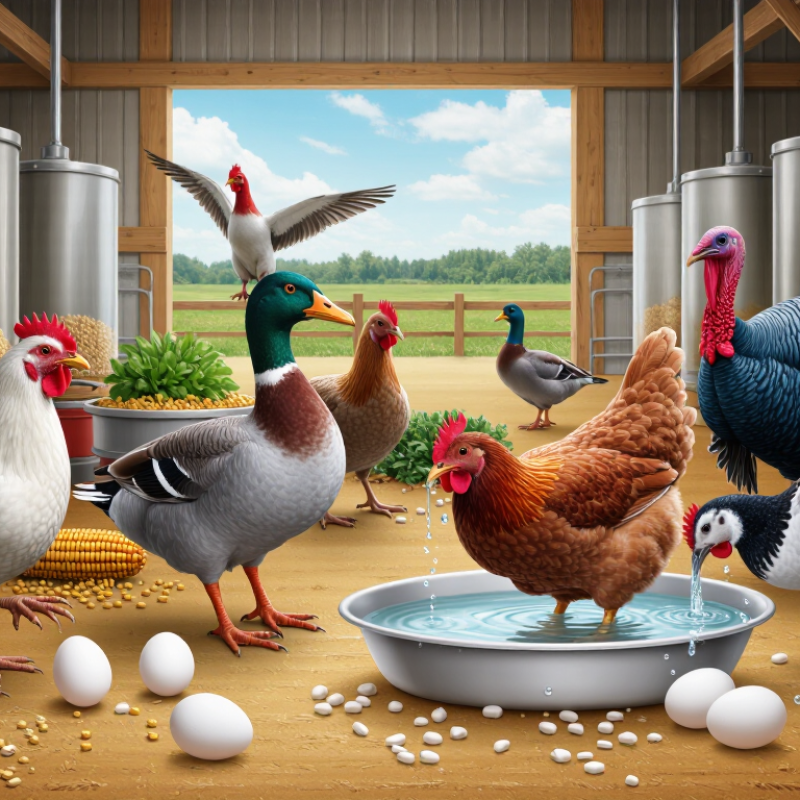
What Is Poultry Nutrition and Why Is It Important?

What Poultry Nutrition Includes

Poultry nutrition is more than choosing a feed formula. It includes energy, amino acids, minerals, vitamins, fats, fiber, and clean water. Each supports a visible function. Energy drives movement and growth, while amino acids build muscle, feathers, enzymes, and eggs. Calcium and phosphorus strengthen bones and shells. Water is nutrition.

The National Research Council’s Nutrient Requirements of Poultry explains that nutrient needs change with age, genetics, production purpose, and environment. A young broiler does not need the same diet as a laying hen. Heat also changes intake and mineral balance. In practical farm management, water quality deserves equal attention. Poor water can reduce drinking, even when the ration looks correct. Small changes matter.

Feed is often the largest variable cost in poultry production. FAO technical guidance commonly places feed near 60–70% of production costs. The OECD-FAO Agricultural Outlook 2024–2033 also identifies poultry as a major source of future meat growth. Better nutrition therefore affects both bird welfare and resource efficiency. Balanced amino acids can reduce unnecessary protein use and nitrogen waste. Still, nutrition is not perfectly predictable. Flock records may reveal uneven growth, wet litter, or weak shells after a formula passes laboratory checks. That gap needs reflection. Laboratory accuracy does not replace observation inside the poultry house. A useful program combines tested ingredients, qualified veterinary or nutrition advice, regular weighing, and honest review of results.
Key Nutrients Required by Chickens and Other Poultry

What Is Poultry Nutrition and Why Is It Important?

Key Nutrients Required by Chickens and Other Poultry

Poultry nutrition supplies the materials birds need for growth, eggs, movement, and disease resistance. Water is the most overlooked nutrient. Clean, cool water supports feed intake and digestion, especially during hot weather. A practical check is simple: observe drinkers, droppings, and flock activity every day.

Energy usually comes from grains and fats. Protein provides amino acids, including lysine and methionine, which build muscle, feathers, and eggs. Chickens cannot balance these nutrients by instinct. The National Research Council’s Nutrient Requirements of Poultry explains that requirements change with age, body weight, production, and environmental temperature. Young broilers often need higher protein density than mature birds. Laying hens need substantial calcium for eggshell formation, commonly around 3.5–4.2% of the complete diet, although the correct level depends on intake and breed.

Calcium and available phosphorus must remain balanced. Too much of either can reduce mineral absorption or increase waste. Vitamins A, D, and E support vision, bones, immunity, and reproduction. Trace minerals such as zinc, copper, manganese, iodine, and selenium work in smaller amounts, but their effects are not small. FAO agricultural statistics show poultry production remains a major global food source, increasing the pressure for efficient diets and reliable feed quality. Still, a laboratory formula is not a perfect farm solution. Heat, stale feed, water contamination, and uneven particle size can change results. I would review both the nutrient analysis and the birds’ daily behavior before adjusting a ration.

What Is Poultry Nutrition and Why Is It Important? - Key Nutrients Required by Chickens and Other Poultry

Nutrient Category Primary Functions Typical Feed Sources Practical Reference Information Possible Signs of Inadequate Supply
Water Supports digestion, nutrient transport, temperature regulation, waste removal, blood circulation, and egg formation. Clean drinking water supplied continuously. Poultry commonly consume about 1.6–2.0 parts of water for each part of feed, although heat, diet, age, and production stage can change this ratio. Reduced feed intake, dehydration, poor growth, lower egg production, and increased mortality in severe cases.
Energy Provides fuel for maintenance, movement, growth, immune activity, and egg production. Cereal grains, wheat, corn, barley, vegetable oils, and other digestible carbohydrates or fats. Energy density influences how much feed birds consume and how efficiently nutrients are used. Slow growth, weight loss, reduced egg output, poor feed efficiency, or excessive body fat when energy intake is too high.
Protein and Essential Amino Acids Build muscles, feathers, enzymes, hormones, antibodies, and egg components. Soybean meal, peas, canola meal, fish meal, and balanced cereal–protein combinations. Typical crude-protein levels may be about 16–18% for layer diets and 20–23% for many broiler starter diets; exact amino-acid balance is more important than protein percentage alone. Poor growth, reduced muscle development, feather damage, low egg production, and smaller eggs.
Linoleic Acid and Other Essential Fatty Acids Support cell membranes, skin and feather condition, reproductive performance, and egg size. Soybean oil, sunflower products, corn, and other vegetable fats. Linoleic acid is an essential fatty acid for poultry; required amounts vary with age, breed, diet, and production purpose. Poor feathering, reduced growth, reproductive problems, and smaller eggs.
Calcium Forms bones and eggshells and supports muscle contraction, nerve function, and blood clotting. Limestone, oyster shell, bone meal, and other approved mineral sources. Layer diets often contain approximately 3.5–4.5% calcium, while growing-bird diets require considerably less; particle size can affect calcium availability. Thin or soft shells, reduced egg production, weak bones, lameness, and poor growth.
Phosphorus Works with calcium for skeletal development and eggshell formation and is involved in energy metabolism. Cereal grains, oilseed meals, phosphate supplements, and animal-derived mineral sources where permitted. Both total and available phosphorus matter. Calcium-to-phosphorus balance is essential for proper bone development. Rickets, weak bones, poor growth, lameness, reduced shell quality, and poor feed utilization.
Sodium and Chloride Maintain fluid balance, nerve transmission, muscle function, and nutrient absorption. Salt and carefully formulated mineral supplements. Levels must be controlled because both deficiency and excess can impair performance and water balance. Poor growth, weakness, reduced feed intake, wet litter, or excessive drinking when levels are unbalanced.
Vitamin A Supports vision, epithelial tissues, immunity, growth, and reproduction. Vitamin premixes, alfalfa, leafy plants, and carotenoid-rich ingredients. Stored dietary vitamin A or provitamin A sources must be sufficient because poultry cannot synthesize vitamin A. Poor growth, eye problems, reduced immunity, respiratory or digestive issues, and lower egg production.
Vitamin D3 Regulates calcium and phosphorus absorption and supports bone and eggshell formation. Fortified feed, vitamin premixes, and limited synthesis through ultraviolet exposure. Dietary vitamin D3 is especially important in housed birds and during rapid growth or egg production. Rickets, weak legs, poor skeletal development, thin shells, and reduced hatchability.
Vitamin E and Selenium Protect cells from oxidative damage and support muscle integrity, immunity, fertility, and hatchability. Vegetable oils, whole grains, green plant material, selenium-containing ingredients, and mineral premixes. Vitamin E and selenium work together, but selenium has a narrow safety margin and must be accurately formulated. Weakness, poor immunity, muscle disorders, reduced fertility, and poor hatchability.
B-Complex Vitamins Assist energy metabolism, blood formation, nervous-system function, skin health, and growth. Fortified feed, cereal grains, oilseed meals, yeast products, and vitamin premixes. Important members include riboflavin, niacin, pantothenic acid, folate, vitamin B12, thiamine, pyridoxine, biotin, and choline. Poor growth, dermatitis, curled-toe paralysis, anemia, reduced hatchability, and nervous-system abnormalities, depending on the vitamin involved.
Vitamin K Supports normal blood clotting and bone metabolism. Green plant material, cereal ingredients, intestinal microbial production, and vitamin premixes. Adequate vitamin K is particularly important when birds experience stress or conditions that interfere with absorption. Excessive bleeding, bruising, anemia, and reduced survival after injury.
Trace Minerals Support enzyme activity, blood formation, immunity, bone development, antioxidant defense, and feather growth. Mineral premixes and approved sources of zinc, copper, manganese, iron, iodine, and selenium. Manganese is important for bone and eggshell formation; zinc supports skin and feathers; iron supports hemoglobin; iodine supports thyroid function. Weak bones, poor feathering, anemia, reduced growth, impaired immunity, and reduced egg production.
Dietary Fiber and Non-Starch Polysaccharides Influence gut motility, microbial activity, satiety, and manure consistency. Wheat bran, oats, barley, forage materials, and other plant ingredients. Moderate fiber can support gut function, but excessive indigestible fiber may reduce energy density and nutrient digestibility. Poor feed conversion, loose droppings, reduced nutrient absorption, or reduced growth when the diet is unbalanced.

Note: Nutrient requirements vary according to poultry species, breed, age, body weight, climate, health status, growth rate, and production stage. The reference values shown are general practical ranges rather than universal formulation targets.

How Feed Supports Growth, Health, and Egg Production

Poultry nutrition is the practical science of turning feed into growth, health, and eggs. A balanced ration supplies energy, amino acids, minerals, vitamins, and clean water. Protein supports muscle and feather formation, while calcium and available phosphorus build strong bones and eggshells. The National Research Council’s Nutrient Requirements of Poultry remains a key technical reference for these needs. Feed quality also matters. Damp ingredients, uneven particle sizes, or rancid fats can reduce intake before illness becomes visible.

Young birds need dense, digestible feed because their organs and muscles develop quickly. Later, laying hens require carefully controlled calcium, energy, and amino acids. A hen may consume around 100–120 grams of feed daily, depending on body size, climate, and production stage. FAOSTAT reported global hen-egg production above 90 million tonnes in 2022, showing the scale of this nutritional challenge. Every wasted gram can affect farm costs and flock efficiency.

Health depends on more than nutrient percentages. Gut-supporting fiber, adequate water, and consistent feeding times can influence manure quality and appetite. Heat stress complicates everything; birds often eat less while still needing nutrients for egg formation. Feed is not a magic formula. I have seen well-designed diets underperform when water lines were dirty or ventilation was poor. That uncomfortable detail deserves attention. Nutrition plans should be checked against local feed analysis, bird age, egg output, body weight, and veterinary guidance.

Factors That Influence Poultry Nutritional Needs

What Is Poultry Nutrition and Why Is It Important?

Factors That Influence Poultry Nutritional Needs

Poultry nutrition is not simply a matter of filling a feeder. Birds need energy, amino acids, minerals, vitamins, and clean water for growth and health. Their requirements change with age, purpose, environment, and daily activity. Needs change. A fast-growing broiler does not eat like a laying hen. A young chick needs a different nutrient balance again.

Age strongly shapes feeding decisions. Starter diets support early tissue development. Grower diets match changing muscle and bone formation. Laying birds need adequate calcium for strong shells. Too little can weaken production. Too much may also create problems, especially when the diet ignores water intake and overall mineral balance.

Body size and genetics influence appetite and nutrient use. Health status matters too. Parasites, illness, or gut stress can reduce absorption, even when feed appears adequate. Heat is another major factor. During hot weather, birds often eat less, so each bite must provide enough nutrients. Water matters. Fresh, cool water becomes essential.

Housing and stocking density also affect needs. Crowded birds may move less, compete at feeders, or experience stress. I have found that feed records mean little without observing the flock. Droppings, feather quality, egg shells, and body condition reveal useful clues. A feeding chart helps, but it cannot replace careful observation or professional veterinary advice.

Common Feeding Practices and Nutritional Challenges

Poultry nutrition is not simply filling feeders with more grain. It means matching nutrients to age, genetics, weather, and production goals. Common feeding programs use starter, grower, and finisher diets to support growth while limiting waste. Layers require balanced calcium, phosphorus, vitamin D, energy, and amino acids for strong shells. Broilers need digestible amino acids and energy, not excessive crude protein. Small changes matter. The OECD-FAO Agricultural Outlook 2024–2033 projects poultry will generate about 43% of additional global meat production during the decade.

Practical feeding also depends on water access, feed form, storage, and daily observation. Clean water should remain available because reduced drinking quickly affects feed intake and performance. Pelleted diets often improve intake, but poor conditioning can create fines and uneven consumption. According to the International Feed Industry Federation, feed commonly represents 60–70% of poultry production costs, so formulation errors can become expensive within days. Mold, mycotoxins, rancid fats, and inconsistent raw materials remain persistent challenges.

Heat stress is another difficult problem. Birds may eat less during hot afternoons, while their need for minerals and water management increases. Gut health can also change after diet transitions, creating wet litter and weaker growth. A feeding table cannot predict every house. In practice, farmers should compare the formula with body weight, eggshell quality, litter condition, and water use. I would question any program that looks perfect on paper but ignores what birds show at the feeder.Mistakes happen.